How to Get Rid of Fungus Gnats in Indoor Plants: Simple, Natural Solutions That Actually Work
- Tammy Johnson

- Dec 18, 2025
- 4 min read
Updated: May 12
Written and edited by Tammy 18th Dec 2025
If you’ve ever watered your favourite indoor plant and been greeted by a cloud of tiny flying insects… welcome to the world of fungus gnats. They’re super annoying, but totally fixable.
Fungus gnats are one of the most common indoor plant pests, especially in warm, humid homes or potting mixes that stay damp for too long. Let’s walk through exactly what they are, why they show up, and how to get rid of fungus gnats naturally, without harsh chemicals.
⸻
What Are Fungus Gnats?
Fungus gnats are tiny black flies (about the size of a fruit fly) that buzz around potting mix and settle on nearby surfaces.
The adults are mostly just a nuisance, but it’s the larvae in the soil that can cause the real trouble.
Fungus gnat larvae can:
• Eat organic matter in potting mix
• Damage young roots
• Cause stunted, droopy growth
• Increase plant stress and susceptibility to disease
They thrive in consistently damp soil, which is why indoor plant lovers often meet them at least once.
⸻
Why Do Fungus Gnats Turn Up?
Fungus gnats appear when the conditions are perfect for them, and unfortunately, indoor plant pots often provide exactly that, especially as we head into the warmer months and start ramping up the watering routine.
Common causes:
• Overwatering
• Poor drainage
• Potting mix high in compost or unbroken-down organic matter
• Re-using old or contaminated soil
• Bringing home new plants with hidden larvae
The trick to winning the battle is fixing both the adults AND the larvae.
⸻
How to Get Rid of Fungus Gnats
1. Let the Soil Dry Out (Your Most Powerful Tool)
Fungus gnats hate dry soil. Their eggs and larvae need moisture to survive.
Let the top 2–5 cm of soil dry out between waterings.
Most indoor plants will handle this just fine, and you’ll interrupt the gnat life cycle.
⸻
2. Bottom Water Instead of Top Watering
Bottom watering keeps the surface drier, making it less appealing to adult gnats.
Fill a bowl or sink, let the pot soak for 10–20 minutes, and allow it to drain well.
⸻
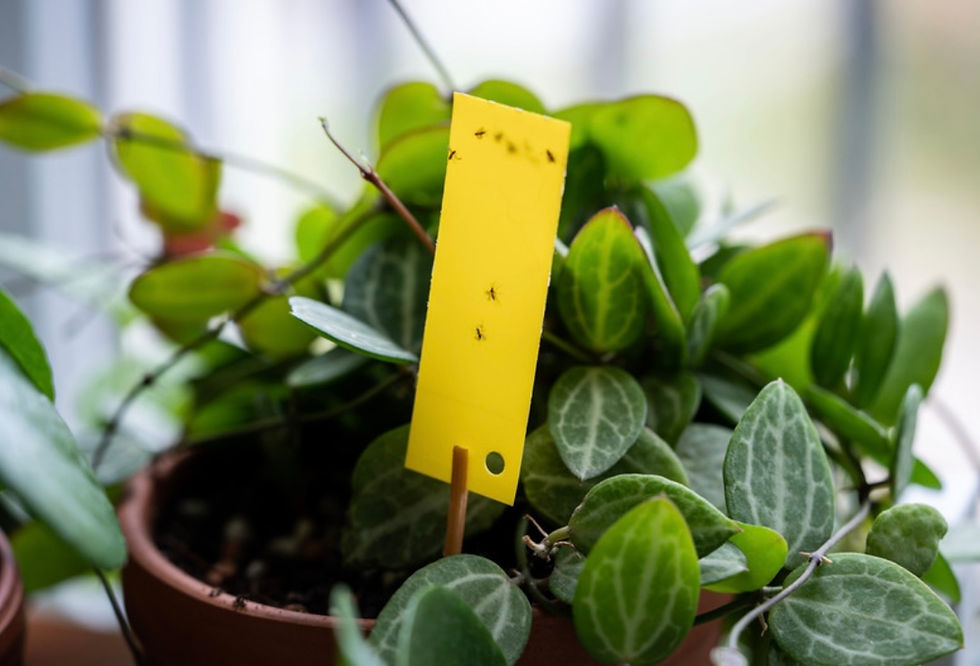
3. Use Sticky Traps for Adult Fungus Gnats
Bright yellow sticky traps are one of the quickest ways to stop adult fungus gnats reproducing.
Place traps:
• On the soil surface
• Hanging just above your plant
• Near windows or lights
They’ll catch dozens within days!
⸻
4. Add a Layer of Sand or Fine Gravel
Creating a dry, gritty top layer makes it impossible for adult gnats to lay eggs.
Great options:
• Horticultural sand
• Decorative pebbles
• Fine aquarium gravel
⸻
5. Home Remedies for Fungus Gnats (That Actually Work)
Cinnamon Powder (Natural Antifungal)
Sprinkle cinnamon on top of the soil and gently swirl it in.
Cinnamon helps reduce the fungus the larvae feed on, slowing their lifecycle.
It won’t fix a huge infestation on its own, but as part of a wholistic action plan, it’s works well.
⸻
6. Neem Oil Soil Treatment
Neem oil disrupts the larvae and pupae in the soil.
Mix according to your bottle’s directions and apply as a soil soak.
Repeat weekly for 2–3 weeks until numbers drop.
⸻
7. Hydrogen Peroxide Soil Flush (Safe When Diluted)
This sounds scarier than it is!
Use 3% hydrogen peroxide mixed at
1 part peroxide : 4 parts water
Pour onto the soil as you would a normal watering.
It kills larvae on contact and breaks down into oxygen + water.
⸻
When Should You Repot?
Sometimes the infestation is so deep that the fastest solution is to repot.
Repot your plant if:
• You see masses of larvae near the drainage holes
• The soil smells sour
• The mix is old, dense or stays wet for days
Use a fresh, well-draining indoor potting mix and clean your pot before reusing.
✨ If They Keep Coming Back…
If fungus gnats seem to return no matter what you try, it’s usually a sign that something in the watering habits, soil balance, or plant environment needs fine-tuning.
That’s where understanding the why makes all the difference.
Fungus gnats are one of those pests every indoor gardener deals with at least once but they’re also one of the easiest to get under control when we understand the lifecycle properly and adjust the conditions that allow them to thrive.
If you’re tired of guessing what’s wrong with your plants or reacting to problems as they pop up, that’s exactly why I created The Backyard.
Inside, you’ll find:
• In-depth plant pest and disease guides
• Step-by-step troubleshooting systems
• Weekly “what to do in the garden” updates
• And the option to chat with me one-on-one for diagnosis help
It’s like having me right there in your yard (minus the muddy boots 😉).
👉 Come join me in The Backyard and garden with confidence.
Happy Gardening 🪴💚
A peek at what you’ll find inside....The Backyard




My 26 page guide to becoming a 'Plant Doctor'. Learn to identify and deal with all the common pests, diseases and disorders.


A 20 page detailed look at what hydrophobic soil is, how to fix it and prevent it ever happening again.


A lovely little 16 page guide to water saving practices and plant recommendations for a drying climate.

Other Posts You Might Like

If you’ve ever spotted an indoor plant with striking lobed leaves and curious red-fuzzy stems, you’ve likely met Philodendron Squamiferum. It’s a tropical climbing beauty that brings an instant jungle vibe to any room.
Given the right light, warmth, and support to climb, it’ll reward you with lush growth and dramatic foliage.

Do you want to know my favourite thing about walking into my bathroom every morning?... Standing there for a moment to admire the sheer beauty of my Rabbits foot fern.
Diagnosing what’s wrong with a sick or dying plant can be tricky stuff, they can exhibit a whole host of symptoms that may indicate different underlying issues.