Time to Tackle Leaf Curl on Stone Fruit
- Tammy Johnson

- Aug 13, 2025
- 5 min read
Updated: Aug 5

Written and edited by Tammy 13th Aug 2025
We're well into the last month of winter and you can definitely feel spring is in the air!
There are a few really important jobs on most gardeners to do lists right now, and if you own any stone fruits this is one of them-treating for leaf curl.
Leaf curl is a fungal disease (caused by Taphrina deformans) that mainly attacks peaches and nectarines. It shows up in spring when new leaves emerge thickened, puckered, and often red or yellow, eventually becoming dry and distorted.
Over the winter months the microscopic fungal spores continue to live on the tree hiding in tiny crevices in the bark and around the dormant buds. When the weather is cool and wet in late winter and into early spring, the spores become active. As the buds swell and leaves begin to emerge, the spores infect the soft new growth, starting the cycle all over again.
Because leaf curl infection happens right at bud burst, your one chance to stop it is during bud swell, that stage where the buds are plump, showing a hint of colour, but before the leaves open. Once the leaves emerge, it’s too late for prevention.
What to do:
Spray with a copper-based fungicide (such as copper oxychloride or copper hydroxide).
Ensure thorough coverage of all branches and buds.
If the weather stays dry, follow up with a second spray about a week later for extra protection.
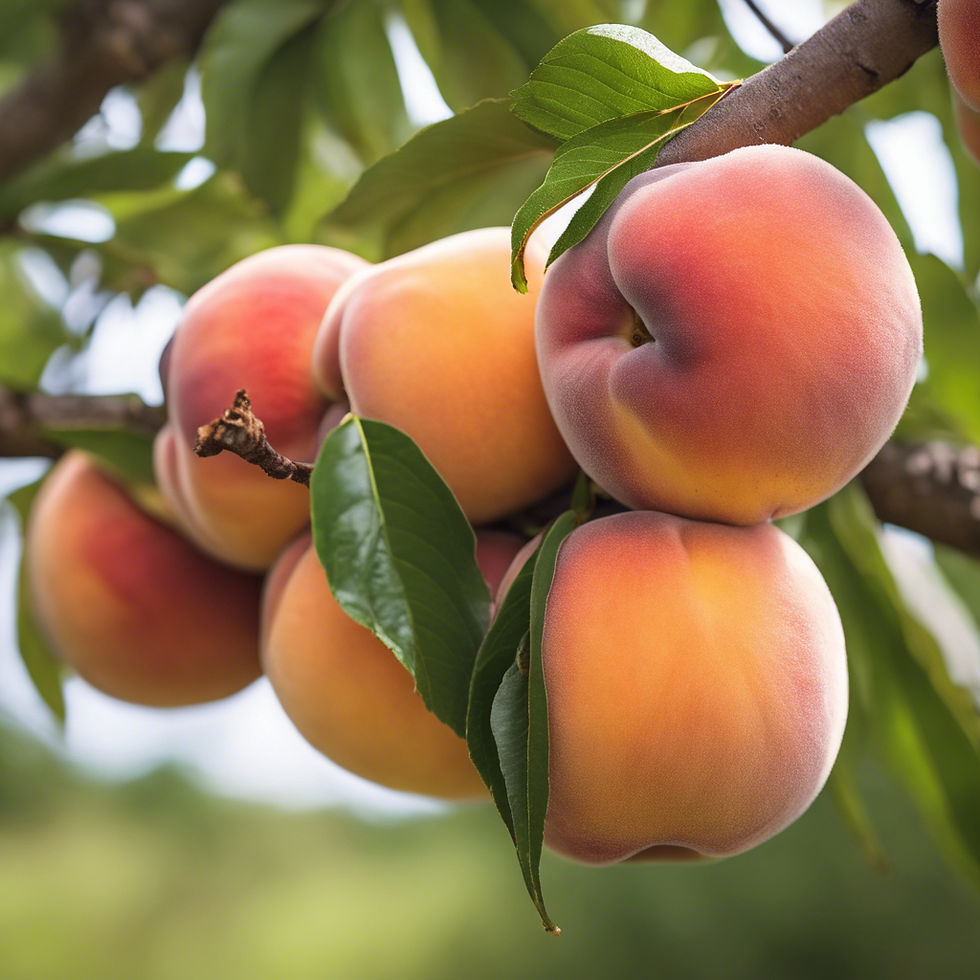
A couple of well-timed sprays now can save you from months of distorted, damaged leaves, and set you up for a bumper crop of beautiful fruit. 🍑

If leaf curl isn’t managed, over time it can take quite a toll on your stone fruit trees.
Weakened growth: Repeated attacks drain the tree’s energy as it tries to replace the damaged leaves.
Reduced fruiting: Fewer healthy leaves mean less photosynthesis, which means less energy for flowers and fruit, yields can drop significantly.
Smaller, poorer-quality fruit: Any fruit that does develop is often small, misshapen, or slow to ripen.
Increased vulnerability: A stressed tree is more prone to other pests, diseases, and even cold or drought damage.
Progressive decline: Severe, repeated infections over several years can lead to dieback of branches and, in extreme cases, the loss of the tree.
For home gardeners, that can mean going from a basket of juicy peaches to barely enough for a snack, or eventually no crop at all. Prevention is far easier (and cheaper) than trying to nurse a badly infected tree back to health.
Think of leaf curl like that uninvited guest who turns up every year right when the party’s about to start, only this one eats all your snacks and wrecks the furniture. A quick spray or two at the right time keeps the gate closed, your leaves lovely, and your peaches plentiful.
Happy gardening 😘🍑
Want a little more support in your garden?
If you enjoy my gentle, practical approach to gardening and life, the stories, the lessons nature teaches us, and the occasional thought-provoking conversation, you'll feel right at home inside 'The Backyard'.
It's a quieter corner where we can learn together, share ideas, and celebrate the simple things.
No endless ads. No commercial noise. No spam.
Just good people, good conversations, and a shared love of gardens, nature, and making the world a little better for your children, grandchildren... and mine too.
As a 'Backyard' member you'll have access to:
In-depth seasonal guides.
Weekly “what to do in the garden this week” newsletter.
And the ability to chat one-on-one with me for plant, pest, disease or disorder troubleshooting, just like having me standing right there in your own yard with you.
It’s a small, warm community built around real gardens and real life.
You’re always welcome to join our little patch. 🪴💚

A peek at what you’ll find inside....The Backyard


My 26 page guide to becoming a 'Plant Doctor'. Learn to identify and deal with all the common pests, diseases and disorders.


A 20 page detailed look at what hydrophobic soil is, how to fix it and prevent it ever happening again.
More Blogs You Might Find Interesting

There’s something almost mystical and other-worldly about the first time you see a barn owl glide across a paddock at dusk.
No wingbeat sound.
No warning call.
Just a pale, heart-shaped face drifting silently through the fading light like a ghost on the wind.
Here in South Australia, we are so lucky to call them our own

One of Australia’s most misunderstood garden legends: the blue-tongue lizard.
Now despite their tough-guy act, blue tongues are absolute sweethearts when it comes to our gardens and ecosystems. They’re not aggressive, they don’t want your lunch, (mind you they’ll snack on the cats food if you leave it out) and they’re certainly not plotting your downfall, they’re just doing an important job and hoping we’ll leave them be.

With climate patterns shifting and drought becoming a more common reality for so many of us, as gardeners we’re faced with the new challenge of how to keep our gardens thriving with less water.
Gardening during dry times isn’t about giving up and accepting defeat, it’s about getting smart and creative. By embracing some simple alternatives, our gardens can become more resilient, sustainable, and beautiful than ever.
Frosts are among the greatest adversaries for gardeners throughout the colder months. Days with clear, sunny skies often lead to subzero temperatures overnight, causing frosts to occur. Without being pro- active and having measures in place, the results can be detrimental.

The biggest question on every gardener's lips right now is “what is eating my seedlings!?" Working out the answer requires a bit of simple detective work, some Sherlock Holmes. It's a case of looking for clues and putting the puzzle pieces together.

Creating your own landscape design can be one of the most exciting and rewarding parts of moving into a new home. It’s your opportunity to shape the outdoor space into something that’s not only beautiful, but functional and your own. Whether you envision a lush garden, a modern patio, or a family-friendly backyard, it all starts with a solid plan.

Thinking about starting a compost pile but not sure where to begin? You’re in the right place! Composting is one of the easiest and most rewarding ways to turn kitchen scraps and garden waste into rich, nutrient-packed soil food. Whether you’ve got a sprawling backyard or a tiny balcony, composting is totally doable and surprisingly fun. In this beginners guide I’ll break it all down step-by-step so you can start transforming your kitchen and garden waste into garden gold.
🌿 A little transparency from the garden gate
The knowledge, experiences, gardening advice and original written content shared in this article are the author’s own. AI has been used only as a creative assistant for proofreading, editing, formatting and selected illustrations.
© 2026 Tammy Johnson | TJ’s Gardening Works. All rights reserved.