
Wood Ash in the Garden: Helpful Soil Booster or Old Gardening Myth?
- Tammy Johnson

- May 22
- 6 min read
Written and edited by Tammy Johnson 22nd May 2026
Some of my earliest memories, from when I was a little girl, were of visiting Nanna and Grandpop’s house in winter.
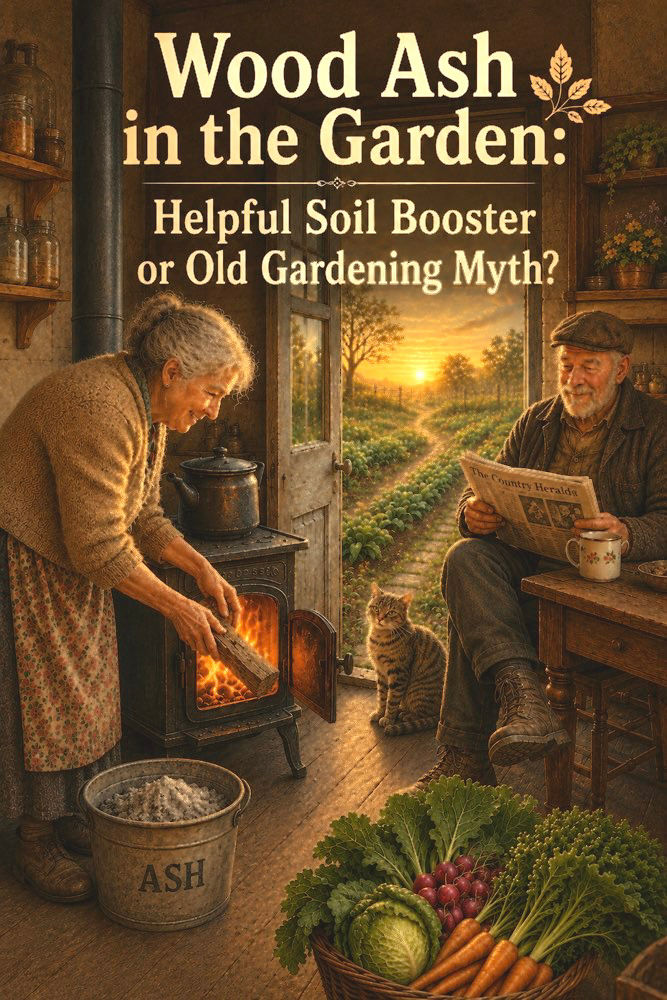
Nanna had one of those old wood stoves in the kitchen, and the little front fire door was almost always cracked open with that soft orange glow flickering away inside. There’d be a pile of chopped wood stacked beside it on the floor, a few weeks’ worth of old newspapers saved for relighting, and an ash bucket half full, ready to go out to the garden. The kitchen was always warm, cozy, and smelled faintly of smoke, rabbit stew, and comfort.
Nanna and Pop didn’t live a fancy life, but it was rich with love, laughter, and resourcefulness.
Nanna always sprinkled the leftover wood ash somewhere throughout the veggie patch or around the garden, and because Nanna did it… Mum eventually did too.
For generations, gardeners have used woodfire ash in the garden as a kind of free homemade fertiliser. Grandparents swore by it. Old orchard growers scattered it beneath fruit trees. Veggie gardeners sprinkled it around the tomatoes and roses.
But does wood ash actually help the garden… or is it just another one of those old gardening myths that’s been passed down over time?
As it turns out — the answer is a bit of both.
So, Can We Use Wood Ash in the Garden?
Yes… if used correctly.
Wood ash can genuinely benefit some soils and plants because it contains valuable minerals absorbed by the tree while it was still alive and growing. Once the wood burns down, a lot of those minerals remain concentrated in the ash.
Wood ash commonly contains:
calcium
potassium
magnesium
phosphorus
trace minerals
One thing wood ash doesn’t really contain, though, is nitrogen. During combustion, nitrogen is largely burnt off and released back into the atmosphere as the wood burns away.
So, while wood ash can help improve soil mineral levels, it’s not really a “complete fertiliser” the way many people assume.
Think of it more as:
a mineral supplement,
soil amendment,
and natural pH adjuster
rather than a magic cure-all for the garden.
An Interesting Fact Most Gardeners Don’t Realise About Wood Ash
Wood ash is surprisingly alkaline and can often have a pH upwards of 9–11.
So, if you were tipping your ash bucket out in the same area of the garden week after week, you could unintentionally raise your soil pH over time.
For gardeners with naturally acidic soils, that's fine... it might actually be beneficial.
But for many of us gardening in naturally alkaline regions — like parts of the Limestone Coast, South Australia, too much wood ash can quietly create problems we don’t immediately notice.
Over time, excessive ash applications can:
lock up nutrients
interfere with soil biology
reduce nutrient availability
create hard, crusty soil conditions
contribute to plant yellowing and deficiencies
It’s one of those classic cases where:
“If a little bit helps… more must be better" right?
Unfortunately, gardening doesn’t always work that way.
Why Old Gardeners Loved Using Wood Ash
Despite the myths, there actually was good logic behind many of the old gardening practices involving wood ash. Wood ash is naturally rich in potassium — an important nutrient that helps support flowering, fruiting, disease resilience, and water regulation within our plants. That’s why older gardeners often sprinkled it around things like tomatoes, roses, pumpkins, garlic, onions and fruit trees.
And interestingly, not all ashes are created equal either. Hardwood ashes like red gum or old fruit tree pruning's, generally contain far more minerals and nutritional value than softwoods like pine.
So, Grandpa wasn’t completely wrong after all. 😉
Can You Put Wood Ash in Compost?
Yes... but sparingly.
A light sprinkling of wood ash through the compost can actually be helpful by:
adding minerals
reducing odours
balancing overly acidic compost materials
Thick layers are another story.
Too much ash in compost can:
raise pH too high
slow microbial activity
interfere with decomposition
As with most things in gardening, balance matters.
A sprinkle is beneficial.
A bucket dumped in one spot… umm, probably not.
Does Wood Ash Stop Slugs and Snails?
This one sits somewhere between fact and myth.
Dry ash can temporarily irritate soft-bodied pests like slugs and snails.
The problem is:
the moment dew, rain, or moisture hits the ash… it quickly loses effectiveness.
So, while it might help briefly, it’s not really a reliable long-term snail control method.
(And honestly, a nighttime wander through the garden with a torch and a bucket still works surprisingly well!)
One Very Important Warning ⚠️
Not all ash is safe to use in the garden.
Avoid using ash from:
treated timber
painted wood
MDF
laminated products
charcoal briquettes
coal ash
These materials can contain glues, chemicals, salts, or heavy metals that you definitely don’t want ending up in your soil.
Only use ash from clean, untreated natural wood.
The Real Secret to Using Wood Ash Successfully
The best gardeners rarely rely on just one thing alone, they tend to use a balanced, layered approach instead. A little bit of this, a little bit of that, all working together. Wood ash works best when used sparingly alongside compost, mulch, healthy soil biology, organic matter and good watering practices, because ultimately, healthy soil is all about balance.
Fun Historical Fact About Wood Ash — Did You Know...
Long before commercial fertilisers existed, wood ash was actually one of the world’s most important agricultural products.
The word “potash” literally comes from the term “pot ashes”, because people once soaked wood ash in large pots of water to extract potassium salts for farming, soap making and food production.
It became such an important source of potassium that potash eventually grew into a major international trade commodity.
Not bad for something most of us simply sweep out of the fireplace and throw away.”
Gardening has always been full of old traditions handed down through generations.
Some turn out to be myths, some turn out to contain real wisdom.
And many sit somewhere beautifully in between.
Wood ash in the garden is a perfect example of that.
Turns out many of those old gardening traditions carried more wisdom than people realised.
Happy Gardening😘💚
Want a little more support in your garden?
If you enjoy my gentle, practical approach to gardening and life, the stories, the lessons nature teaches us, and the occasional thought-provoking conversation, you'll feel right at home inside 'The Backyard'.
It's a quieter corner where we can learn together, share ideas, and celebrate the simple things.
No endless ads. No commercial noise. No spam.
Just good people, good conversations, and a shared love of gardens, nature, and making the world a little better for your children, grandchildren... and mine too.
As a 'Backyard' member you'll have access to:
In-depth seasonal guides.
Weekly “what to do in the garden this week” newsletter.
And the ability to chat one-on-one with me for plant, pest, disease or disorder troubleshooting, just like having me standing right there in your own yard with you.
It’s a small, warm community built around real gardens and real life.
You’re always welcome to join our little patch. 🪴💚
A peek at what you’ll find inside....The Backyard


My 26 page guide to becoming a 'Plant Doctor'. Learn to identify and deal with all the common pests, diseases and disorders.


A 20 page detailed look at what hydrophobic soil is, how to fix it and prevent it ever happening again.


A lovely little 16 page guide to water saving practices and plant recommendations for a drying climate.
More Blogs You Might Find Interesting

There’s something almost mystical and other-worldly about the first time you see a barn owl glide across a paddock at dusk.
No wingbeat sound.
No warning call.
Just a pale, heart-shaped face drifting silently through the fading light like a ghost on the wind.
Here in South Australia, we are so lucky to call them our own

One of Australia’s most misunderstood garden legends: the blue-tongue lizard.
Now despite their tough-guy act, blue tongues are absolute sweethearts when it comes to our gardens and ecosystems. They’re not aggressive, they don’t want your lunch, (mind you they’ll snack on the cats food if you leave it out) and they’re certainly not plotting your downfall, they’re just doing an important job and hoping we’ll leave them be.

With climate patterns shifting and drought becoming a more common reality for so many of us, as gardeners we’re faced with the new challenge of how to keep our gardens thriving with less water.
Gardening during dry times isn’t about giving up and accepting defeat, it’s about getting smart and creative. By embracing some simple alternatives, our gardens can become more resilient, sustainable, and beautiful than ever.


